
The Unexpected Wildlife of Naples: What Seasonal Visitors Might Discover
A Different Side of Life in Naples
From iguanas in palm trees to pelicans roosting at dusk, Naples neighborhoods offer some unexpected wildlife encounters.
Every region of the country has its own variety of wildlife. Depending on where you live, you might be accustomed to seeing deer wandering through neighborhoods, squirrels darting across lawns, or the occasional raccoon making its rounds after dark. These animals become such a familiar part of our surroundings that we often give them little thought.
Naples, Florida, is no exception. Wildlife is part of everyday life here, too, although some of the creatures you encounter may be quite different from those you're used to seeing back home. For seasonal visitors arriving from the Midwest or Northeast, discovering those differences can be one of the more interesting and unexpected parts of spending a winter in Southwest Florida.
During one of my winter stays, I rented a home in an older, established neighborhood near downtown Naples, where canals and waterways ran behind the houses. Like many neighborhoods in Southwest Florida, residential properties are interspersed with mature trees, lush vegetation, and natural areas that provide habitat for wildlife. Over the course of my stay, I began noticing just how many different creatures shared these surroundings.
A small camera positioned near my front door revealed nighttime visitors, including raccoons, opossums, and wandering cats. The iguanas, however, were another story.
Iguanas: An Unexpected Neighborhood Resident
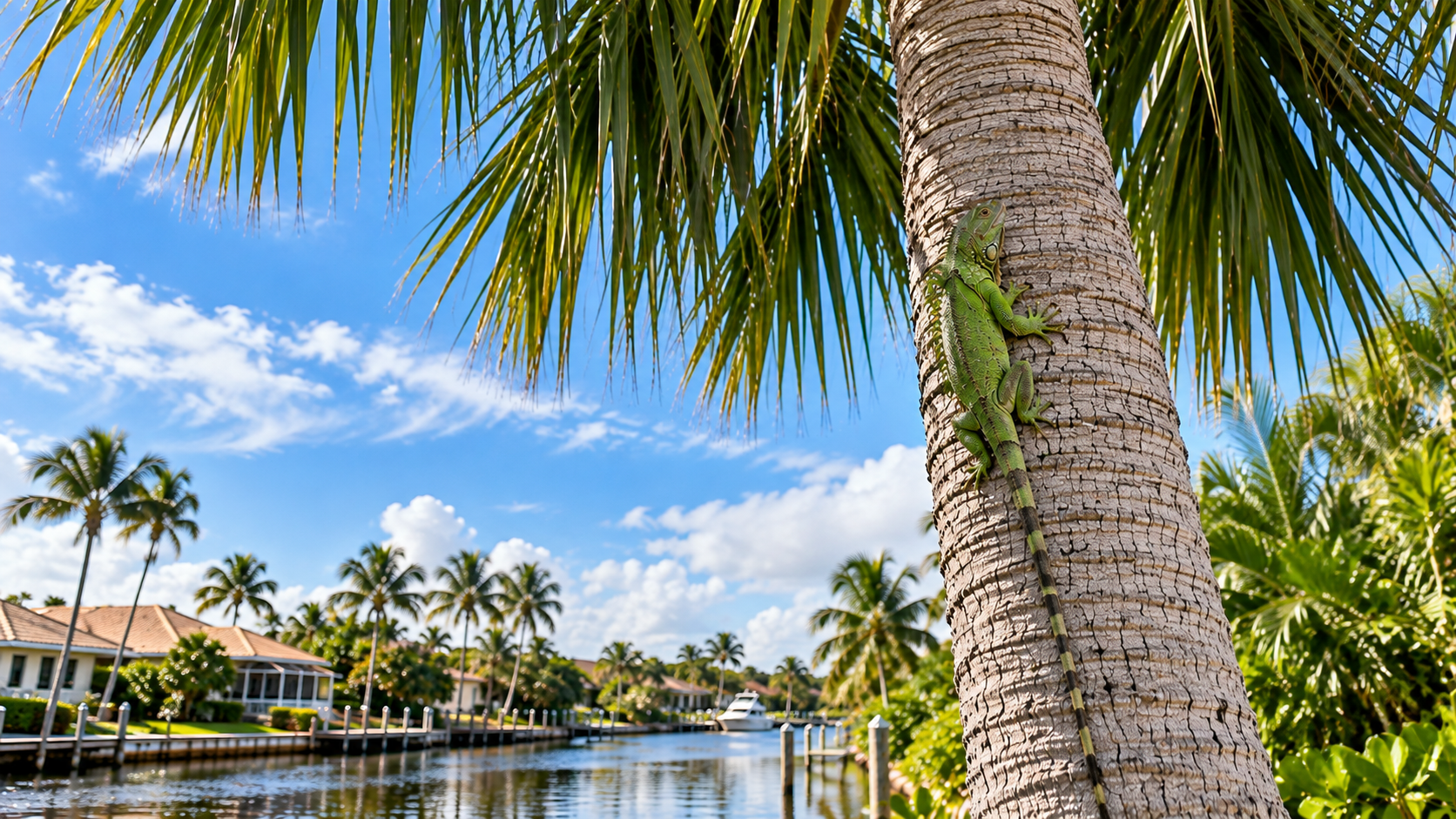
Spotting a green iguana for the first time can be quite a surprise. These large lizards are not native to Florida, but they have established populations in certain areas of the southern peninsula, particularly in warmer coastal communities. Even within Naples, sightings can vary considerably depending on the neighborhood and surrounding environment.
Despite all the years I've spent in Florida, it wasn't until my winter stay in Naples in 2026 that I saw my very first iguana. I had never encountered a lizard of that size before, and I found it a little unsettling at first. I also heard one scampering across the roof, and a neighbor told me he'd once discovered a three-foot iguana stretched out in the sunshine on the back of his boat. He seemed completely unfazed by the encounter, accepting it as just another part of life in Naples.
Green iguanas can grow to more than five feet in length, including their long tails. They are excellent climbers and swimmers and are commonly found near permanent water, including canals, ponds, and lakes. Nearby trees and vegetation provide food and shelter, while sunny seawalls, docks, and other open areas offer places to bask. When startled, iguanas may dive into the water to escape, something I witnessed firsthand when my dog chased them into the canal on several occasions.
Although their appearance can be startling, green iguanas generally avoid people. They are primarily plant eaters, feeding on leaves, flowers, and other vegetation. However, their burrowing and feeding habits can damage landscaping, seawalls, and other property features, making them a concern for some homeowners.
Temperature also plays an important role in where iguanas thrive. Their populations are most established in South Florida, where winters are generally mild. During unusually cold weather, iguanas can become temporarily immobilized and may fall from trees. Some recover once temperatures rise.
This became a particularly visible issue during Florida's February 2026 cold spell, when the state temporarily authorized a special collection program for cold-stunned invasive iguanas. More than 5,000 green iguanas were removed statewide during the two-day effort, illustrating just how established these animals have become in parts of Florida.
A Different Kind of Birdwatching
Birdlife is another distinctive feature of Southwest Florida, particularly in neighborhoods with mature trees, canals, and nearby coastal waters. Some species are familiar to visitors from northern states, while others may be entirely new discoveries.
One of the more noticeable residents is the pileated woodpecker, a large, striking bird with a bright red crest and a distinctive, almost laughing call. These woodpeckers excavate nesting cavities in dead or decaying trees, including palm trunks. Their loud calls often announce their presence long before they're seen. During my stay, I frequently heard pileated woodpeckers calling from the palms and watched them working on the trunks. I even saw them feeding their young in nesting cavities in a few unusual palm trees that had lost their crowns.
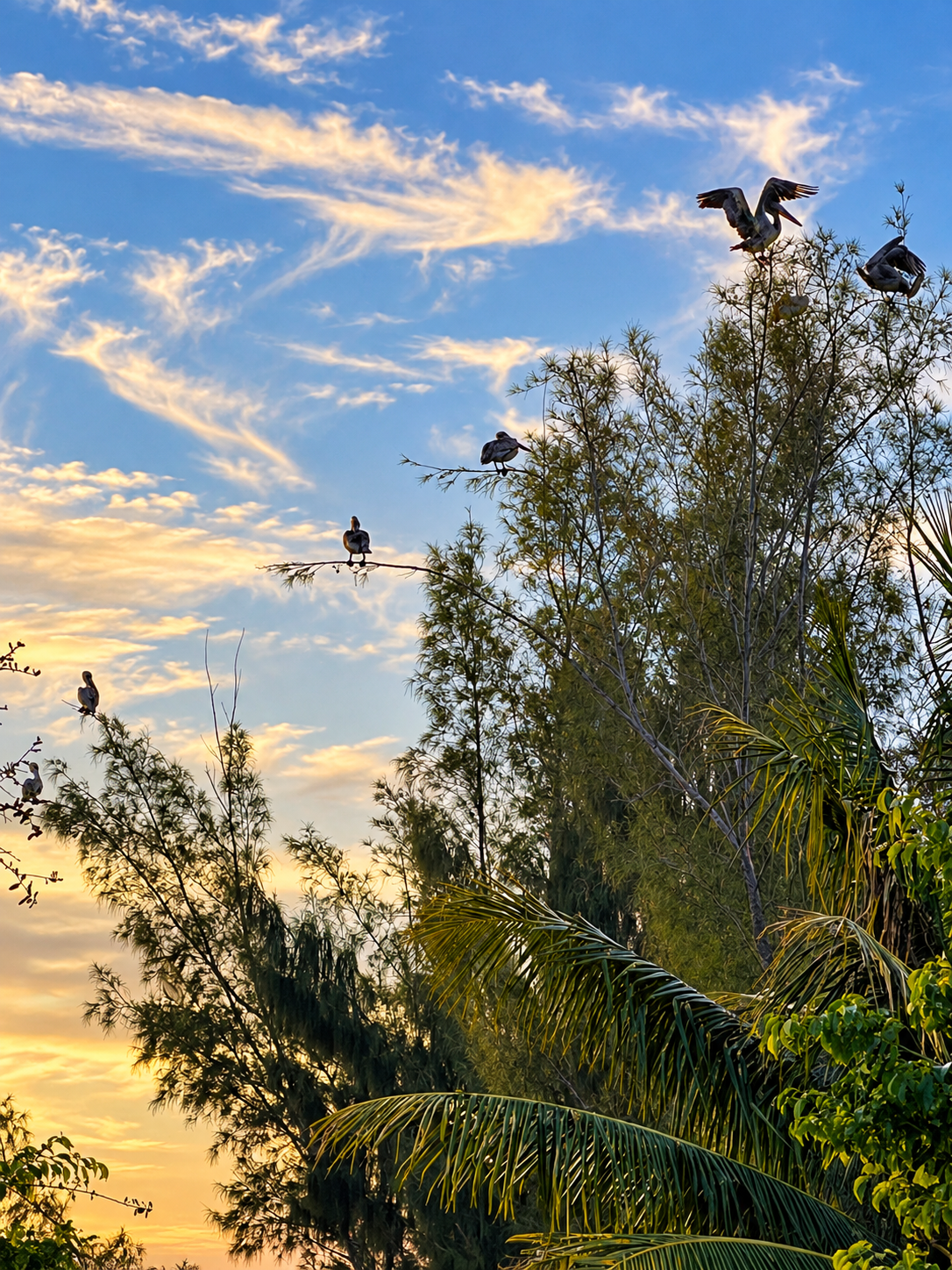
Pelicans offered another surprise. Although they're commonly associated with beaches, fishing boats, and docks, brown pelicans also roost in trees near the water. Along the canals behind the homes, I noticed them arriving in the late afternoon, just as dusk approached, settling into certain trees with flexible branches that seemed to bend under their weight. I had never realized that pelicans roosted in trees, much less that they would return to particular spots as evening approached.
Ospreys are another familiar sight around Southwest Florida's coastal waterways. These fish-eating birds of prey often build large stick nests high in tall trees or on specially constructed platforms. Their nests can be particularly noticeable in coastal neighborhoods, where they return to raise their young.
Bald eagles can also be seen soaring overhead, while blue jays add their unmistakable calls to the neighborhood sounds. Although blue jays are familiar in northern states, their constant movement through the trees can make them easier to hear than to spot.
Beyond the more recognizable birds, there was an almost constant chorus of birdsong as I walked through the neighborhood. I couldn't identify many of the birds by their calls, but their presence was unmistakable. Coming from the Midwest, where winter mornings are often noticeably quieter, I found it especially enjoyable to hear so much birdsong during the months when I would normally be surrounded by winter's stillness.
One of the quieter pleasures of spending time in Naples is discovering how much birdlife can be observed simply by looking and listening from your patio or lanai.
The Smaller Residents of Naples
Not all of Naples' wildlife is large or particularly noticeable. Some of the most interesting creatures are found in gardens, around patios, and among the tropical plants that surround many homes.
Small lizards, often called chameleons by residents and visitors, are a familiar sight throughout Southwest Florida. Most are actually anoles, which can be seen darting across sidewalks and patios, climbing landscaping structures, or resting on tree trunks. Unlike the much larger iguanas, these little lizards are generally harmless to people and help control insect populations. They're particularly active on warm, sunny days. My dog occasionally tried chasing them, but never stood a chance. They're remarkably fast!
Florida's flowering plants also attract a variety of pollinators, including bees with striking metallic blue or blue-green coloring. During my stay, I noticed small blue bees visiting the four o'clock flowers (Mirabilis jalapa) surrounding my patio. Their unusual coloring was something I hadn't encountered before.
Palmetto bugs, a common Florida name for certain large cockroaches, may occasionally wander indoors in search of moisture, food, or shelter. Although an unexpected encounter can be startling, finding one doesn't necessarily indicate a problem with the cleanliness of a home.
After Dark: A Different Set of Visitors
As daylight faded, a different collection of neighborhood residents began making their rounds. The camera near my front door revealed just how active the property became after dark, when the daytime visitors had largely disappeared.
Raccoons and opossums are familiar to many people from the Midwest and Northeast, so their presence in Naples wasn't particularly surprising. What I found interesting was discovering how much activity took place around the property after everyone had settled in for the evening.
These animals are generally most active after dark, searching for food and moving through the neighborhood. Raccoons are particularly resourceful when it comes to finding food, while opossums tend to be solitary wanderers. Both have adapted well to living near people.
The camera offered a small glimpse into a side of neighborhood life I otherwise would have missed. Apparently, the property had quite a few visitors after bedtime.
Beyond the Backyard: Southwest Florida's Larger Wildlife
Southwest Florida is also home to some larger animals that visitors may hear about but are less likely to encounter during an ordinary stay in Naples.
Alligators are perhaps Florida's best-known residents. They primarily inhabit freshwater lakes, ponds, marshes, and canals, although they can occasionally be found in brackish or saltwater. The canal behind the home where I stayed was saltwater, so encountering an alligator wasn't something I particularly expected. I never saw one or heard of one being spotted nearby. Still, it's wise to exercise caution around Florida's waterways, particularly when walking pets near the shoreline.
Florida black bears inhabit parts of Southwest Florida, especially wooded and less-developed areas, although they occasionally wander into residential neighborhoods. The endangered Florida panther also lives in the region, primarily in natural areas of Collier County. Both are far less likely to be encountered in established Naples neighborhoods than the birds, lizards, and smaller animals described earlier.
Burmese pythons, an invasive species established in the Everglades and surrounding areas, have also been documented in Collier County. While they remain a concern for wildlife officials, they are not a routine sight in Naples' developed residential neighborhoods.
Your Surroundings Make a Difference
One of the interesting things about Naples is how much the surroundings can change from one neighborhood to another. A home along a canal, a condominium near the beach, and a property bordering a nature preserve may offer very different experiences, even though they're all within the same general area.
Homes with mature trees, tropical landscaping, and nearby waterways often provide inviting habitats for birds, lizards, and other small animals. Waterfront properties may offer opportunities to watch pelicans, ospreys, and other waterbirds going about their daily routines. Properties closer to wooded areas or preserves may attract a different variety of wildlife.
In more densely developed neighborhoods or condominium communities, wildlife may be less noticeable, although birds, small lizards, and insects are still part of the Southwest Florida environment.
For anyone considering a seasonal rental, the surrounding landscape is worth paying attention to. Looking beyond the home itself to the trees, waterways, gardens, and nearby natural areas can give you a better sense of what everyday life there might be like.
What surprised me most wasn't any single animal, but the variety of wildlife I encountered simply by going about my everyday routine. From the unmistakable calls of woodpeckers to pelicans settling into the trees at dusk, there was always something interesting happening just outside the door.
For seasonal visitors, these encounters can become an unexpected part of life in Naples. Sometimes, the most memorable discoveries aren't found at the beach or in the places you planned to visit, but right in the neighborhood where you're staying.
Sources
Florida Fish and Wildlife Conservation Commission (FWC)
Cornell Lab of Ornithology — All About Birds
About the Author
Jane Rogers is the author of Snowbird Like a Pro, a guide based on her own experience navigating the seasonal-living lifestyle. She writes about the questions, decisions and everyday realities that come with spending part of the year somewhere warmer.
Learn more about Snowbird Like a Pro
Follow Naples Snowbirds & Seasonal Residents on Facebook for articles, local information, and insights into seasonal life in Naples.